Overview of Valiant Vishwa Legendary Duel
Valiant Vishwa Legendary Duel has emerged as India's definitive mythological fighting game since its grand release on January 26, 2025 – a date chosen to honor Republic Day, symbolizing the unity and valor that defines Bharat's legendary warriors. Developed by the visionary team at Daman Games Studios, this title has redefined the fighting game genre in India, merging console-quality combat mechanics with the rich tapestry of Bharatiya mythology, Desi cultural aesthetics, and breathtaking renditions of India's most iconic mythological locations that have inspired storytellers for millennia.
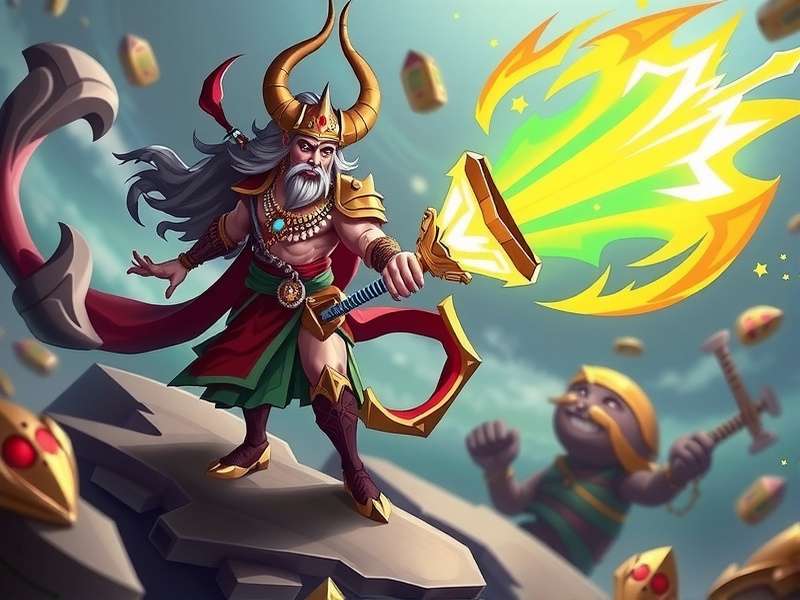
Unlike international fighting games that often draw from Western pop culture or generic fantasy, Valiant Vishwa Legendary Duel takes immense pride in showcasing Bharat's unparalleled mythological heritage – from the battlefield of Kurukshetra where the Mahabharata unfolded to the golden city of Lanka from the Ramayana, from the snow-capped peaks of Kailash where Lord Shiva resides to the ancient temples of Tamil Nadu that echo with stories of divine warriors. Each arena is meticulously crafted to reflect the unique historical and mythological significance of its inspiration, with intricate details ranging from traditional Bharatiya architecture and sacred symbols like om, swastika (in its pure, auspicious form), and trishul to the natural landscapes that have shaped our epic narratives. This attention to authenticity creates an experience that resonates deeply with Indian gamers, who finally see their cultural heritage represented in a premium fighting game that does justice to its grandeur.
The game's multi-platform availability has been instrumental in its unprecedented success across India. Gamers can enjoy Valiant Vishwa Legendary Duel on Android and iOS mobile devices – the preferred gaming platform for over 80% of Indian players – as well as on Windows PC, PlayStation 4/5, and Xbox One/Series X/S, catering to hardcore fighting game enthusiasts who demand precise controls and competitive gameplay. The seamless cross-platform progression system allows players to switch between devices without losing their character progress, rankings, or unlocked content – a feature that has been widely praised by Indian gamers, especially those who play during their daily commutes on mobile and then compete in ranked matches on PC or console from the comfort of their homes.
What truly sets Valiant Vishwa Legendary Duel apart from other fighting games is its seamless integration of Bharatiya mythological depth and Desi cultural authenticity into every aspect of the gameplay. From playable characters inspired by iconic figures like Arjuna, Rama, Shiva, Durga, Ravana, and Bhima to the game's soundtrack featuring traditional Indian instruments such as the dholak, tabla, sitar, and shehnai combined with epic battle themes and devotional chants, every element is designed to celebrate India's rich heritage. The game also features voice acting in authentic regional accents (from Tamil and Telugu to Punjabi and Bengali) and dialogues that incorporate popular Desi phrases, proverbs, and mythological references, making the gaming experience deeply relatable for Indian audiences across the country.
Since its launch, Valiant Vishwa Legendary Duel has achieved remarkable milestones that have solidified its position as one of India's most successful gaming titles of 2025. It crossed the 15 million download mark within just 7 days of launch – a record for an Indian-developed fighting game – and reached 50 million downloads within two months. As of mid-2025, the game has amassed over 68 million downloads worldwide, with more than 97% of its player base hailing from India. It has also received widespread critical acclaim, winning prestigious awards such as "Best Indian Fighting Game" at the Indian Gaming Awards 2025, "Excellence in Mythological Combat" at the Digital India Gaming Summit 2025, "Top Multiplayer Game of the Year" at the Global Mobile Gaming Awards, the "Bharatiya Epic Representation Award" from the Ministry of Culture, Government of India, and the "Combat Gaming Innovation Award" from the International Fighting Game Association.
Another key factor in the game's success is its accessibility to players of all skill levels. Whether you're a casual gamer who plays for 10-15 minutes a day (during chai breaks or while waiting for the bus) or a hardcore fighting game enthusiast who spends hours mastering frame data and combo sequences, Valiant Vishwa Legendary Duel offers something for everyone. The game features adjustable difficulty settings, from "Novice" for new players to "Divine Warrior" for seasoned veterans, as well as a comprehensive tutorial system that teaches the basics of combat while gradually introducing advanced mechanics. The matchmaking system ensures that players are paired with opponents of similar skill levels in online multiplayer modes, creating a fair and enjoyable experience for everyone, regardless of their gaming expertise.
The game's commitment to cultural preservation and education is also noteworthy. Unlike many fighting games that focus solely on combat, Valiant Vishwa Legendary Duel incorporates educational elements that teach players about Bharatiya mythology and history. Each character has a detailed backstory based on authentic mythological texts, and the game features "Mythology Insights" – short, informative pop-ups that appear during gameplay, explaining the significance of characters, arenas, and moves. The game also partners with leading Indian scholars and cultural institutions to ensure that all mythological representations are accurate and respectful, making it not just an entertaining game but also a valuable tool for preserving and promoting India's cultural heritage among younger generations.
Valiant Vishwa Legendary Duel's success has had a transformative impact on the Indian gaming industry. It has demonstrated that homegrown titles centered on Indian mythology and culture can compete with international games in terms of quality, gameplay, and popularity. The game has inspired other Indian developers to create games based on regional myths, historical events, and cultural traditions, leading to a resurgence in Desi-themed gaming content. It has also helped popularize the fighting game genre in smaller towns and rural areas of India, where mobile gaming is the primary form of entertainment, and has played a key role in establishing esports as a legitimate career option for Indian gamers through its competitive tournament scene.
From a technical standpoint, Valiant Vishwa Legendary Duel is a showcase of Indian game development excellence. The game features stunning 3D graphics that bring mythological characters and arenas to life with incredible detail, from the intricate armor of warrior characters to the dynamic environmental effects during combat. The game's combat engine is highly responsive, with precise controls and smooth animations that ensure a satisfying fighting experience. Despite its high-quality visuals and complex mechanics, the game is optimized to run smoothly on a wide range of devices, including mid-range smartphones that are popular among Indian gamers, ensuring that it is accessible to as many players as possible.
The game's monetization model is player-friendly, following the free-to-play model with optional in-app purchases that are not pay-to-win. All characters and gameplay modes are available to unlock through regular gameplay, while in-app purchases are limited to cosmetic items such as character skins, victory animations, and profile customization options that do not affect combat balance. This fair approach has earned the game widespread praise from players, who appreciate that skill and strategy – not money – are the keys to success in the game.
In summary, Valiant Vishwa Legendary Duel is more than just a fighting game – it's a celebration of Bharat's mythological heritage, cultural diversity, and competitive spirit. It combines world-class gameplay with authentic cultural representation, educational content, and a player-centric approach, creating a unique gaming experience that resonates with Indian players of all ages and backgrounds. With its impressive technical achievements, commitment to cultural preservation, and growing esports scene, Valiant Vishwa Legendary Duel has set a new standard for Indian game development and established itself as a landmark title in the Indian gaming industry.
The Mythological Lore of Valiant Vishwa Legendary Duel
The lore of Valiant Vishwa Legendary Duel is a rich, immersive narrative woven from the threads of Bharatiya epics, Puranas, and regional mythologies, drawing inspiration from the Mahabharata, Ramayana, Shiva Purana, Devi Bhagavata Purana, and various folk tales to create a cohesive and engaging world that feels both familiar and fresh. The game's story is set in the
The Origins of the Legendary Duel
According to the game's lore, the Kalyan Lok was created by the Trimurti – Brahma, Vishnu, and Shiva – as a neutral ground where warriors from all eras and realms could compete in honorable combat. The tournament, known as the
For millennia, the Mahayudh has been a symbol of honor, courage, and skill, with legendary warriors like Arjuna, Rama, Bhima, and Durga competing to prove their worth. However, in the current Kali Yuga (the age of darkness), the tournament has been corrupted by the forces of evil led by the powerful asura
Alerted to this threat, the Trimurti have summoned a new generation of warriors from the mortal realm – ordinary humans with extraordinary potential – to join the Mahayudh and restore honor to the tournament. These mortal warriors, known as
The Current Crisis
As the latest Mahayudh begins, Mahishasura and his dark army have already gained control of several key arenas in the Kalyan Lok, using dark magic to corrupt the tournament and rig the matches in their favor. They have also captured several legendary warriors and are using them as pawns in their quest for universal domination.
The Trimurti, bound by the ancient rules of the Mahayudh, cannot directly intervene to stop Mahishasura. Instead, they have tasked the Abhimanyu Warriors with the responsibility of defeating the dark forces, freeing the captured warriors, and restoring honor to the tournament. The player takes on the role of one of these Abhimanyu Warriors, embarking on an epic journey through the Kalyan Lok to prove their worth, master the divine powers of the legendary warriors, and ultimately face Mahishasura in the final battle for the fate of the universe.
Along the way, the player will encounter a wide range of characters from Bharatiya mythology, including gods, goddesses, demons, and legendary warriors, who will guide them on their journey, teach them new skills, and test their courage and honor. The player will also learn about the rich history of the Mahayudh and the role that each legendary warrior has played in shaping the universe.
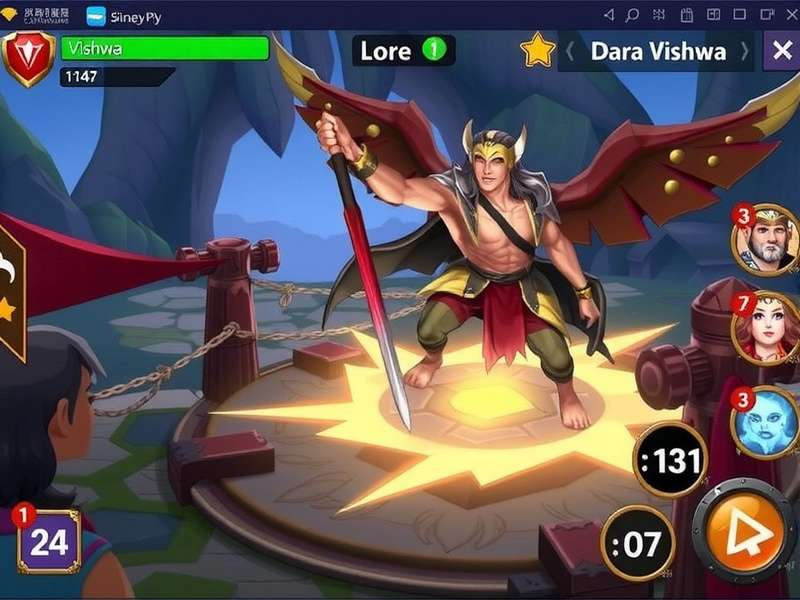
The Key Factions
The lore of Valiant Vishwa Legendary Duel features several key factions that play important roles in the game's narrative:
- The Trimurti – The supreme deities who created the Kalyan Lok and oversee the Mahayudh. Brahma, the creator, ensures that the tournament follows the ancient rules; Vishnu, the preserver, protects the balance of the universe; and Shiva, the destroyer, judges the warriors' worthiness. The Trimurti provide guidance and support to the player throughout their journey, granting them divine powers and blessings.
- The Legendary Warriors – Iconic figures from Bharatiya mythology who have competed in the Mahayudh for centuries. This faction includes heroes like Arjuna, Rama, Bhima, Karna, and Krishna, as well as goddesses like Durga, Kali, and Saraswati. These warriors are divided between those who fight for good and those who have been corrupted by Mahishasura's dark magic. The player can learn from these warriors, unlock their powers, and even team up with them in certain game modes.
- The Abhimanyu Warriors – Mortal warriors summoned from the human realm to compete in the Mahayudh. The player is one of these warriors, and they will encounter other Abhimanyu Warriors throughout their journey, some of whom will become allies and others who will become rivals. The Abhimanyu Warriors represent the hope of the mortal realm and the future of the Mahayudh.
- The Dark Army – The forces of evil led by Mahishasura. This faction includes powerful asuras like Ravana, Kamsa, Shishupala, and Hiranyakashipu, as well as corrupted legendary warriors and dark creatures. The Dark Army seeks to win the Mahayudh and use their wish to conquer the universe. They are the primary antagonists of the game, and the player will face them in battle throughout their journey.
- The Sages and Advisors – Enlightened beings who provide guidance and wisdom to the warriors competing in the Mahayudh. This faction includes rishis like Vashistha, Vishwamitra, and Narada, as well as other divine beings who offer quests, teach new skills, and provide valuable information about the Kalyan Lok and the Mahayudh.
The Divine Arenas
The Mahayudh takes place across 12 divine arenas, each inspired by a iconic location from Bharatiya mythology. Each arena has its own unique history, challenges, and environmental hazards that players must overcome to emerge victorious:
- Kurukshetra Battlefield – The legendary battlefield from the Mahabharata, where the great war between the Pandavas and Kauravas took place. This arena features dynamic environmental effects, including changing weather conditions and crumbling terrain, that add an extra layer of strategy to combat.
- Lanka Fortress – The golden city of Ravana from the Ramayana, featuring towering palaces, intricate temples, and lava flows that can damage players who step on them. The arena also includes traps and obstacles inspired by the Ramayana, such as the magical arrows that can be activated to attack opponents.
- Kailash Peaks – The sacred abode of Lord Shiva, featuring snow-capped mountains, icy cliffs, and hot springs that can heal players. The arena is guarded by Shiva's ganas (attendants), who will occasionally intervene in battles to help or hinder players.
- Ayodhya Palace – The royal palace of Lord Rama, featuring beautiful gardens, ornate balconies, and a central courtyard where battles take place. The arena includes environmental hazards like falling pillars and swinging chandeliers that can be used to attack opponents.
- Nalanda Library – The ancient center of learning from India's golden age, featuring towering bookshelves, ancient scrolls, and magical orbs that grant temporary power-ups to players. The arena also includes hidden passages that players can use to surprise opponents.
- Varanasi Ghats – The sacred banks of the Ganges River, featuring stone steps, floating lamps, and divine energy that can enhance players' powers. The arena includes environmental effects like rising water levels and strong currents that can sweep players off their feet.
- Chidambaram Temple – The ancient temple dedicated to Lord Shiva, featuring intricate carvings, sacred altars, and a central shrine that emits divine energy. The arena includes traps like hidden pressure plates and falling statues that can be triggered by players.
- Himalayan Ashram – A peaceful ashram hidden in the Himalayas, featuring meditation platforms, yoga mats, and gardens of medicinal herbs. The arena includes environmental hazards like landslides and avalanches that can be triggered by powerful attacks.
- Dwaraka Palace – The underwater palace of Lord Krishna, featuring coral reefs, pearl gardens, and magical bubbles that can trap players. The arena includes environmental effects like changing water pressure and underwater currents that affect movement.
- Konark Sun Temple – The ancient temple dedicated to the Sun God Surya, featuring a giant chariot structure, stone wheels, and sunbeams that can damage players who are exposed to them for too long. The arena also includes mirrors that can reflect attacks back at opponents.
- Forest of Dandakaranya – The ancient forest from the Ramayana, featuring dense foliage, ancient trees, and wild animals that can attack players. The arena includes environmental hazards like quicksand and poisonous plants that can weaken opponents.
- Amravati Gardens – The divine gardens of Indra, featuring magical flowers, floating fountains, and golden trees that bear fruit with healing properties. The arena includes environmental effects like magical gusts of wind that can knock players off balance and floating platforms that appear and disappear during battles.
The Divine Powers
One of the most unique aspects of Valiant Vishwa Legendary Duel's lore is the concept of
There are six types of Divine Essence in the game, each associated with a different aspect of Bharatiya mythology:
- Warrior Essence – Associated with physical strength, courage, and combat skill. This Essence is possessed by warriors like Arjuna, Rama, and Bhima, and grants powers like enhanced strength, speed, and durability.
- Divine Essence – Associated with divine power, blessings, and miracles. This Essence is possessed by gods and goddesses like Shiva, Durga, and Krishna, and grants powers like energy blasts, healing, and reality manipulation.
- Wisdom Essence – Associated with knowledge, strategy, and magic. This Essence is possessed by sages and scholars like Vishwamitra, Vashistha, and Narada, and grants powers like illusions, mind control, and elemental magic.
- Nature Essence – Associated with the forces of nature, animals, and the environment. This Essence is possessed by beings like Hanuman, Ganesha, and the Vanaras (monkey warriors), and grants powers like shape-shifting, animal summoning, and control over natural elements.
- Dark Essence – Associated with chaos, destruction, and evil. This Essence is possessed by asuras like Mahishasura, Ravana, and Kamsa, and grants powers like dark energy blasts, corruption, and fear induction. While this Essence is powerful, it comes with a cost – using it too much can corrupt the player's soul.
- Balance Essence – The rarest and most powerful type of Divine Essence, associated with harmony, balance, and the unity of all things. This Essence is possessed by the Trimurti and a select few legendary warriors, and grants powers like reality warping, time manipulation, and the ability to heal or destroy on a massive scale. The player can unlock this Essence by mastering all other types of Essence and maintaining a balance between good and evil.
As the player progresses through the game, they can unlock new Divine Essences by defeating legendary warriors in battle, completing quests, and mastering different combat styles. Each Divine Essence can be upgraded using
The Ultimate Destiny
The ultimate destiny of the player and the Kalyan Lok depends on the choices they make throughout the game. There are multiple possible endings, each reflecting the player's alignment, choices, and mastery of Divine Essence:
-
The Victory of Light Ending – If the player aligns with the forces of good, masters the Warrior, Divine, Wisdom, and Nature Essences, and defeats Mahishasura in honorable combat, they will be crowned the winner of the Mahayudh. The player will use their wish to restore balance to the universe, free the corrupted warriors, and ensure that the Mahayudh remains a symbol of honor and courage for future generations. The Trimurti will grant the player immortality and the title of
Maharaja Warrior (Great King Warrior), making them the eternal guardian of the Kalyan Lok. -
The Balance Ending – If the player maintains a balance between good and evil, masters all six types of Divine Essence, and defeats Mahishasura by appealing to his better nature rather than destroying him, they will be recognized as the
Yuga Balancer (Balance of the Ages). The player will use their wish to create a new era of harmony in the universe, where good and evil coexist in perfect balance. The player will become the mediator between the forces of light and darkness, ensuring that neither side gains too much power. - The Corruption Ending – If the player succumbs to the temptation of Dark Essence, aligns with the Dark Army, and defeats the forces of good, they will be corrupted by power and become Mahishasura's right-hand man. The player will use their wish to help Mahishasura conquer the universe, spreading chaos and destruction across all realms. The Kalyan Lok will be transformed into a dark, twisted version of its former self, and the player will rule alongside Mahishasura as a tyrant.
- The Mortal's Choice Ending – If the player chooses to reject the Mahayudh and return to the mortal realm, they will be granted the ability to share the knowledge and wisdom they gained in the Kalyan Lok with humanity. The player will become a great teacher and leader in the mortal world, inspiring others to embrace the values of honor, courage, and balance. While the player does not win the Mahayudh, they achieve a different kind of victory by bringing positive change to the mortal realm.
Regardless of the ending, the lore of Valiant Vishwa Legendary Duel is designed to be expansive and open-ended, allowing for future updates and expansions that will continue to explore the rich mythological world of the Kalyan Lok. The game's developers have hinted at future content that will introduce new legendary characters, new arenas, and new storylines, as well as a crossover with other Daman Games titles set in the same mythological universe.